
Concrete Restoration

Concrete Restoration Contractor Serving South Florida

Spalling concrete, corroded rebar and structural repairs for condominiums, hotels, parking garages and commercial buildings across Miami-Dade, Broward and Palm Beach counties. Performed by our own crews under Florida Certified General Contractor license CGC1535259.
The Problem

Why Concrete Spalls in South Florida

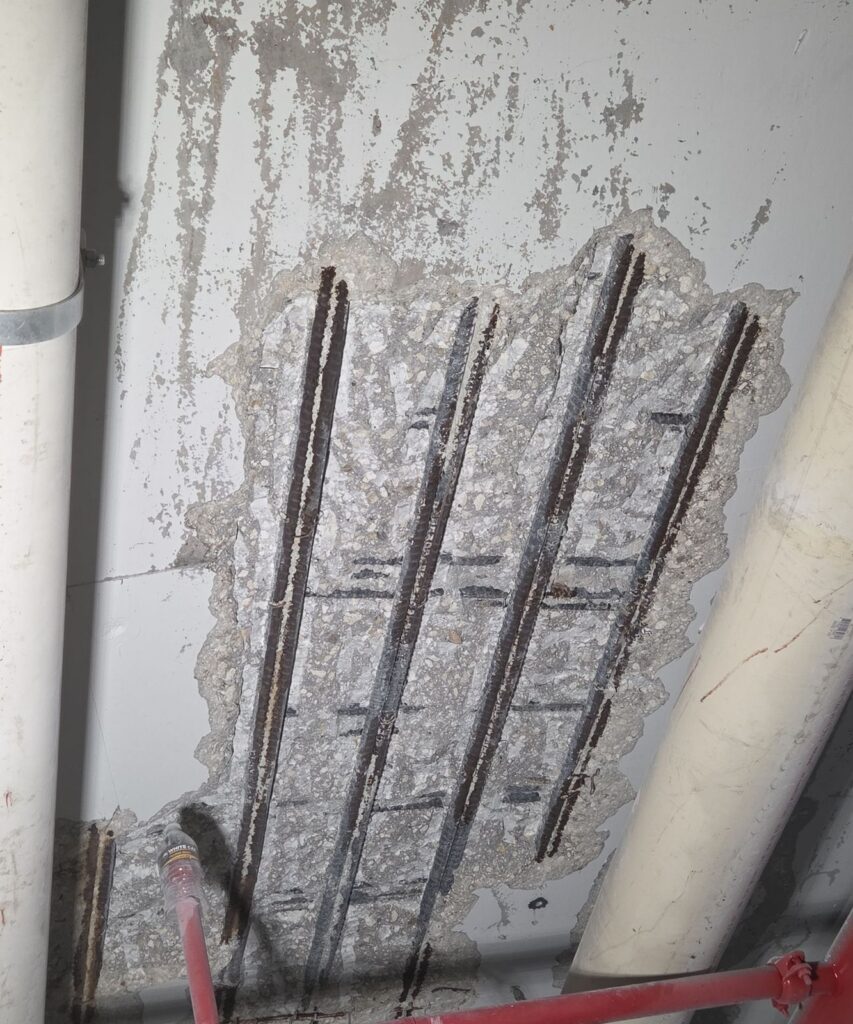
Concrete is strong, but the steel inside it is not protected forever. Salt air and water work their way in and reach the reinforcing steel. The steel rusts, and rust takes up more room than the steel it replaces. That pressure cracks the concrete and pushes it off the building. Patching the surface does not stop it. The repair has to start at the steel.

Signs your building needs attention

  • Rust stains bleeding through paint or stucco
  • Cracks that follow the line of the reinforcing steel
  • Concrete that sounds hollow when tapped
  • Exposed or flaking rebar
  • Loose or fallen pieces on balconies, walkways or garage ceilings
What We Repair

Structural Concrete Repair, Top to Bottom

We repair the parts of a building that carry load and the surfaces that protect them.
  • Beams, columns and tie beams
  • Slabs, balconies and catwalks
  • Parking garages and vehicular decks
  • Stairs, ramps and walkways
  • Stucco, corner beads and architectural profiles over repaired concrete
  • Protective coatings and waterproofing so the repair lasts
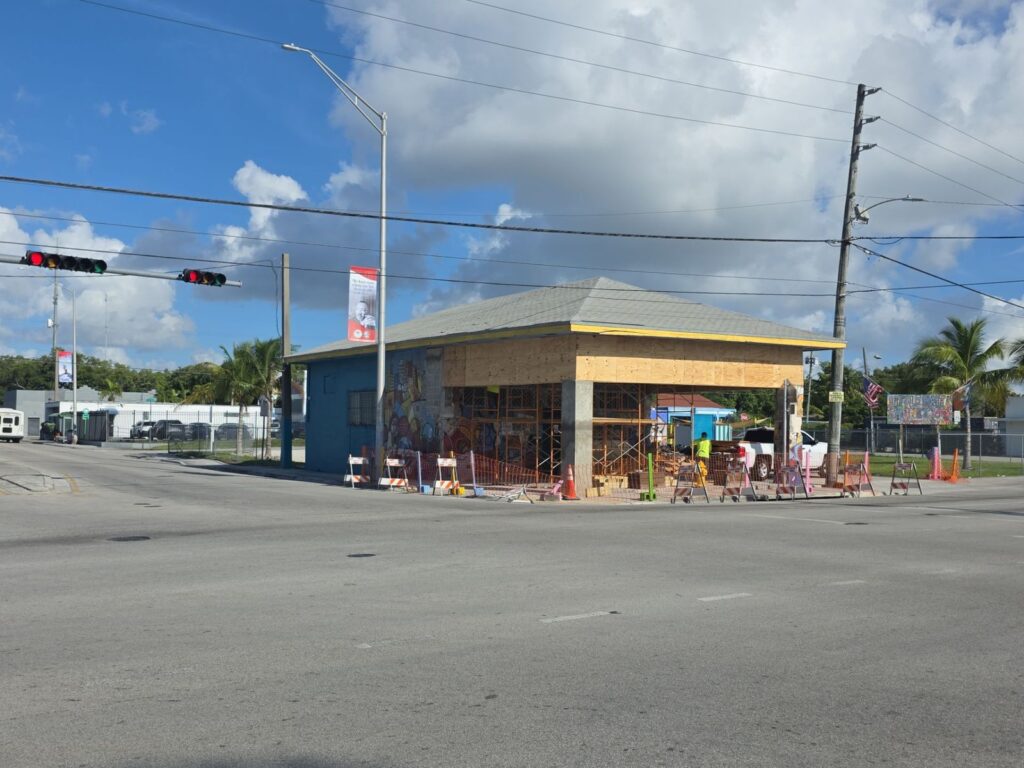
Structural restoration work on a commercial building in Little Haiti, Miami - column beam restored
Our Method

How a Proper Concrete Repair Is Done

Every repair follows the engineer’s details. These are the steps our crews follow on a typical beam, column or slab repair.
How we do it

Concrete Beam Repair, Step by Step

Animated drawing of a damaged concrete beam being repaired in eight steps CROSS-SECTION saw-cut ¾ in. min. Sound it, map the damage, mark the limits Temporary shores when the engineer requires Edge saw-cut ½–1 in., never into the rebar Chip behind the rebar, however deep it sits Clean all the way around, to bright metal Lap in new steel per the engineer’s detail Bonding agent, formwork, repair mortar Cured, finished, coated. Shores out last.
1 / 8
  1. We sound the concrete with a hammer, map cracks, spalls and rust stains, and mark repair limits that take in all of the damage.

  2. When the engineer calls for it, temporary shores carry the load before any concrete comes out.

  3. A shallow saw-cut, typically ½ to 1 inch deep, squares off the edges of the repair so there are no thin, feathered edges. Only the edge is cut, and the blade never touches the reinforcing steel.

  4. Loose and delaminated concrete is chipped out to sound concrete and behind every exposed bar, so the steel can be cleaned all the way around and the new material locks around it. The bar sets the depth: wherever it sits, we leave at least ¾ inch of clear space behind it, more if the spec calls for it.

  5. Rust and scale are removed all the way around each bar, down to bright metal. Every bar is checked for section loss, and a corrosion-inhibiting primer goes on when the repair system calls for it.

  6. Where bars have lost too much section, new bars are lapped in or replaced to the engineer’s detail.

  7. A bonding agent goes on when the system calls for it. Then the formwork goes up and structural repair mortar or concrete is placed and consolidated to restore the full section.

  8. The repair is cured to spec, finished to match the original profile and coated if specified. Shores come out only after the repair reaches design strength.

Illustration only. Every repair follows the engineer of record’s details, the project specifications and the repair-material manufacturer’s instructions.

Recertification and Violations

Building Recertification and Unsafe-Structure Repairs

If your building has a recertification deadline, an engineer’s report or a violation notice, the repairs are what clear it. We turn the engineer’s repair plan into permitted, inspected, closed-out work.
  • Repairs scoped from the engineer’s report and quantities
  • Permit application and corrections handled with your engineer
  • Special Inspector coordination during the work
  • Closeout paperwork for the building department
  • Direct communication with your board or ownership

Need an engineer first? We can introduce independent engineering firms. They contract directly with you, not through us.
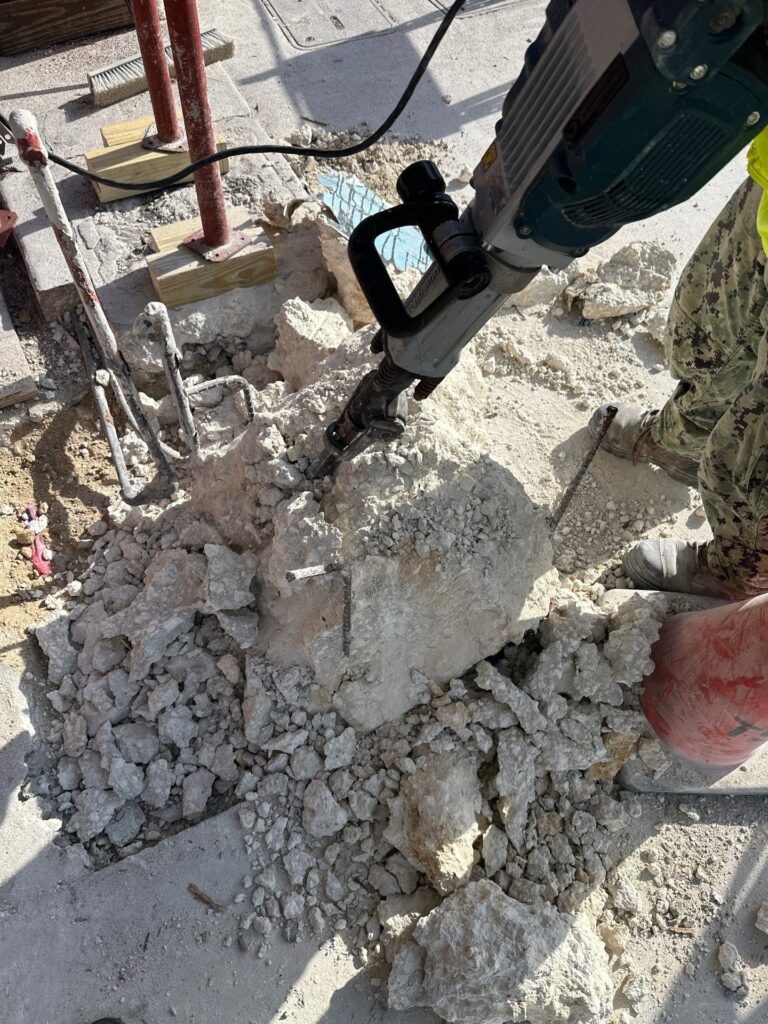
Crew chipping out a damaged concrete column base with reinforcing steel exposed
Why CPPMS

Big Buildings. Small Repairs. Same Standards.

Our Own Crews

Our employees do the concrete work. Specialty trades are brought in only where the job calls for them.

Licensed and Insured

Florida Certified General Contractor CGC1535259. Insured, and BBB Accredited with an A+ rating.

Warranty in Writing

Concrete restoration and structural repairs carry our 5-year workmanship warranty, written into the contract.

Small repairs are welcome. A single balcony edge or one garage column gets the same method as a full building. See our completed projects.

Service Area

Miami-Dade, Broward and Palm Beach Counties

Miami  ·  Miami Beach  ·  Coral Gables  ·  Hialeah  ·  Fort Lauderdale  ·  Hollywood  ·  Pompano Beach  ·  Coral Springs  ·  Boca Raton  ·  West Palm Beach

Common Questions

Concrete Restoration Questions

What is concrete spalling?

Spalling is concrete breaking away from a building, usually because the reinforcing steel inside has rusted and expanded. It is common near the coast, and it gets worse with time.

Can spalled concrete just be patched?

A surface patch hides the damage but leaves the rusting steel in place, so it fails again. A lasting repair removes the concrete around the bar, cleans the steel on all sides and rebuilds the section.

Do we need an engineer?

For structural repairs and recertification work, yes. The engineer defines the repair and inspects it. We work with your engineer, or we can introduce independent firms that contract directly with you.

Do concrete repairs need a permit?

Structural concrete repairs generally do. We prepare the permit application with the engineer’s drawings and see it through inspections and closeout.

Do you take small jobs?

Yes. We repair single balconies, columns and garage areas as well as full buildings.

Can the building stay open during repairs?

In most cases, yes. We plan access, protection and work areas around residents, guests and tenants.

Have a Report, a Violation, or a Crack You Are Worried About?

Call us or send the details. We will look at it and tell you what it needs.